Showing posts with label Budget Travel. Show all posts

Monday, 14 October 2019

Top 6 things to do in Uganda when on budget.


Uganda is known as one of Africa's affordable destinations. However, when it comes to some activities which involve national parks where you have to pay some hefty fees, it becomes a challenge for backpackers and budget travelers. Fear not though, that doesn't mean it’s the end of it all. There is a lot you can do in Uganda without having to go see animals or paying daily entrance fees in a National park.

Here are the top six things you can do in Uganda while on a budget.
1- Take a walking tour in Kampala.
When you arrive in a country, the first thing you need to get well versed with is the history of the country, the city and culture. A walking tour will illuminate the everyday way of life. It will also orient you to the surroundings and enable you to be a savvy tourist with insights that’s not apparent when you’re on a tour bus. You’ll also be on your way to exploring independently. Be sure to enjoy Kampala’s night life, one of the most renowned in all of East Africa.
Tourists on  Walking Tour.


2- Take a trip to Sipi Falls.

This is a three day voyage. Sipi Falls is located in Eastern Uganda about 5 hours from Kampala. On your way to Sipi you get to see the great eastern rift valley. The views in this area are very spectacular with lush emerald scenery. There’s some hiking involved which will take you to the waterfalls. Don’t worry we can shape it according to your fitness level. The highest waterfall in Uganda is located here at a height of 100 meters. If you love java, don’t miss out on a coffee tour as the region is known for it. Get to witness how the beans are cared for right until they reach your cup. How does a fresh roasted cup of coffee sound? Other activities includes a sunset walk which is breathtaking and various cultural tours.
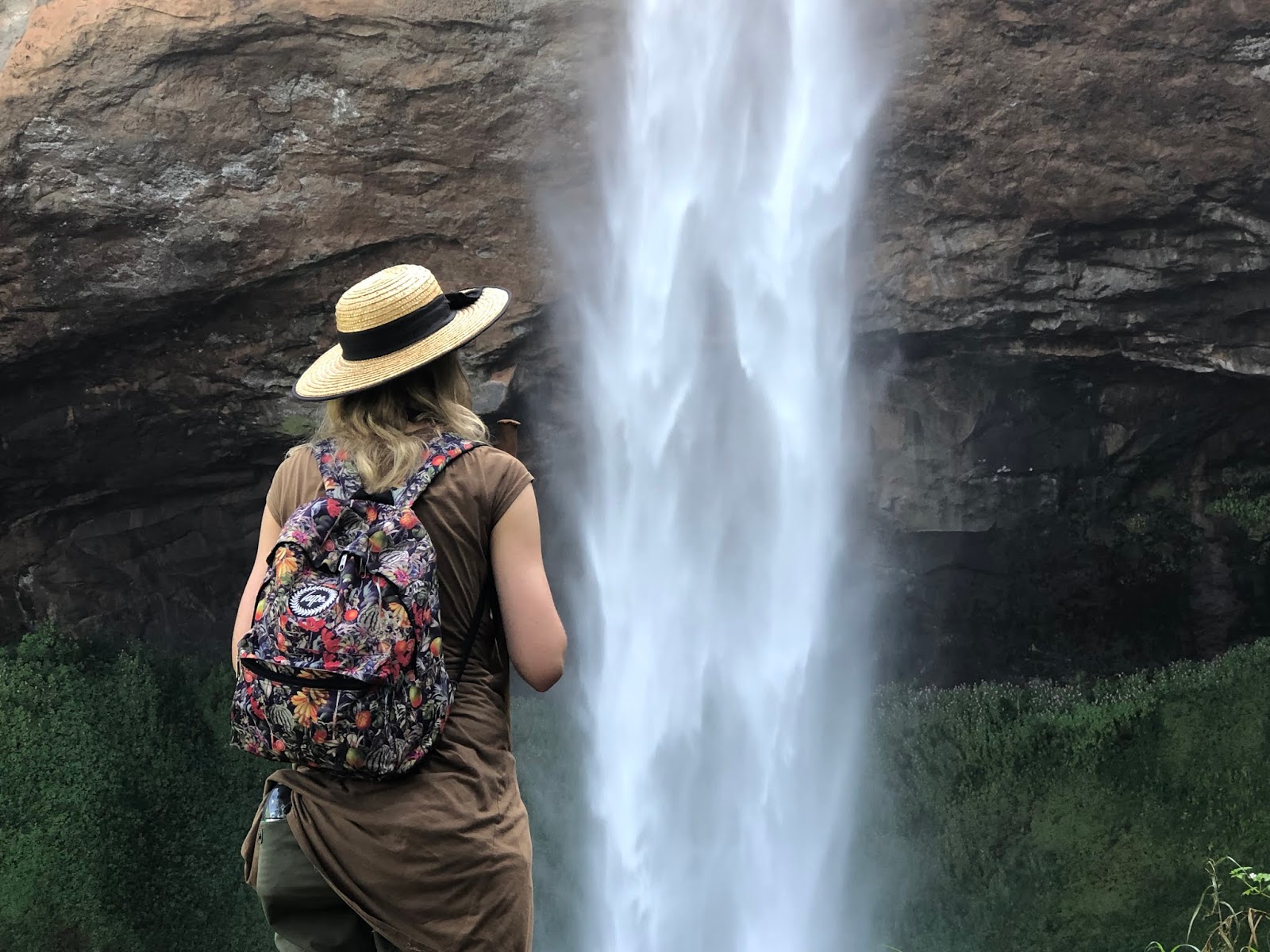

Sipi Falls.

3- Do not miss exploring Fortportal's crater lakes.

This is one pf the coolest places you will visit in Uganda and if you really love nature. Fortportal is located in western Uganda , approximately a 5-6 hour drive depending on your transport means. It is full of a beautiful green landscape and a gorgeous backdrop of Mountain Rwenzori and locally famous crater lakes. Walking tours to the lakes are available according to your fitness. You also have an option to cover a bigger area with a motorbike tour. There are some hidden hot springs in the region which are not crowded by tourists and you can reach them with a good hike. There are various campsites and budget accommodation in the vicinity of the crater Lakes. If your pockets are able to support you, make sure to go Chimpanzee trekking in Kibale forest because it is way cheaper than Gorilla trekking.


One of the craters in Fortportal.

Views during the hikes.

4- Choose from the various excursions in Jinja.
Jinja is a popular tourist hot spot. There are a number of activities located in this town found in Eastern Uganda, It takes about a two hour drive but again this depends on traffic. Depending on your time and money, Jinja can be doable in one day. You can make several stops along the way at Sezibwa falls, Mabira forest and can wrap it up with a boat ride on the source of the world's longest river, the Nile. However, it would be nice to spend a couple of days in this town. The highlight would be white water rafting in the Nile River with the best recommended companies. This is a serious adrenaline rush! But that is not all, there are other activities in this area like tubing on the Nile, kayaking on the Nile, horseback riding, quad biking, cycling and bird watching for the bird lovers.
Cruising on the River Nile.

5- Canoeing on Lake Bunyonyi.
Kabale is a beautiful town known as the Switzerland of Uganda. It shouldn’t  be missed! Although it takes about a 7 to 8 hour drive, don't worry about this, all good things are worth the journey. The sacrifice is worth the effort. The most spectacular lake to see here is Lake Bunyonyi and the very many beautifully terraced hills. Lake Bunyonyi is  the freshest Lake in Uganda to swim and it is bilharzia free. Make sure to get on canoe to visit the various islands on this lake. Take some hikes on the hills to get the best views of the islands on this lake, or you can simply take some guided walking tours in around some of the villages. 


If you have time, you can also visit the Batwa tribe living in the hilly areas of this region.
Some of the many islands in Lake Bunyonyi.


6- Taking it easy in Entebbe.
Entebbe is a chill town located on the shores of Lake Victoria. Most people spend some days here when they are about to take a fight back home or when the city gets too crazy and hectic for them. You can go cycling in Entebbe  which is easier because it is less crowded. Don’t forget to soak up in the sun in picturesque beaches and make sure to enjoy some good deep fried tilapia with chips. If you want to explore the world's second biggest lake, here’s your chance with a boat cruise on Lake Victoria.
We do find Mabamba swamp in Lake Victoria which is known for many bird species and one special one known as the shoebill. If you are a birdwatcher, do not miss this little wonder! 


Fishing on Lake Victoria,

Uganda has so much to offer! Drop us a line for more info!

Friday, 17 May 2019

What to do in Ho Chi Minh City (Saigon) in a short time.


When I left Cambodia, my next country on the list was Vietnam. I had to fly to Saigon (Ho Chi Minh City) this time because I did not have time to cross over land and luckily enough the flights in this region are cheaper than those offered in Africa.

The first thing I noticed when I arrived were the bikes! I have never seen so many motorbikes in one place, but luckily enough I made it to my hostel on an uber bike which is actually the cheapest mode of transport. It was wonderful to be in a new place. I was ready for sightseeing.
Traffic jam in Ho Chi Minh City.

My uber bike.

First off I experienced the War Remnants Museum in Saigon. This historical institution enables you to see what Vietnam was like during colonial times, the big war with the Americans and the aftermath. It was extremely powerful and emotional, and quite refreshing to hear a perspective that you don’t see in Hollywood movies. However, between the enormous loss of life it was also sad and heavy to process everything. After about two hours in the museum, I moved on to the Saigon Notre-Dame Basilica, the city's cathedral in the old town. It was beautiful and serene.

The sad truth.

One of the fighter tanks used in the war.

Saigon Notra- Dame Basilica 

Don't forget to visit the Ho Chi Minh City post office which was constructed when Vietnam was part of French Indochina in the late 19th century. The architecture is beautiful and so is the decor of this building. You will get good deals or small gifts like fridge magnets, postcards, key rings etc. My first day in Vietnam was the last day on the calendar. It was fun although New Year’s Eve is not a big deal in this part of the world but the party happened on Bui Vien street, party central in Saigon. Make sure to check it out if you enjoy the night life. It’s full of bars and live shows.

The City Post Office.

Having some drinks on Bui Vien street.

The next morning I left the city and commuted one hour to see the Cu Chi  tunnels which are extensive underground passageways used by Viet Congs during warfare. Numbering in thousands of miles, these hidden roads were multipurpose. They housed troops, transported communications and supplies, served as a means for executing booby traps, and gave the Viet Cong the ability to mount surprise attacks. This is quite a popular tourist attraction and should not be missed by those looking for history. If you’re not claustrophobic and are a petite size, check it out. Make your way through them. It’s unimaginable what these soldiers experienced. The passageways are dark and dank, but should not be missed regardless if you choose to go underground or not.

On the way to the tunnel
Getting out a tunnel.

Disguised tunnel used as a trap.


I enjoyed the night markets in Asia and the ones in Ho Chi Minh City are not to pass up! Stroll around for some cheap street food and shop for clothes and gifts. I recommend the Ben Thanh market in District One, one of the earliest surviving structures of Ho Chi Minh City and a popular tourist spot for those searching for local handcrafts, textile souvenirs and local cuisine.
Variety of fruits on the street.

Coloured street rice.
Stalls  in Beh Thanh market.

I wanted to leave the south of Vietnam at once, so I decided  to go to visit the Cai Be floating markets on the Tien river. This a hub for transporting agricultural goods and sea food from the Mekong river to the rest of Vietnam. We got on a boat very early in the morning and that proved to be the best time to see the floating boats carrying out business. We later got off to a small village where we learned real Asian cuisine by making rice noodles from scratch.

Right after our floating market tour.

A boat with potatoes on Tien river.

Home made rice noodles.
Because of my limited time in the country, I had to take a flight the next day to Da Nang. This will be another blog for next time. 

Friday, 1 February 2019

Exotic Namibia and what I did.

Namibia had always been on my list. My aim was to visit the world’s oldest desert but when I got there, I checked off more than I expected. I flew into Lusaka, Zambia and from there took a long bus ride (nearly a day) along Botswana then to Namibia. 

Just before my long ride.


It was quite refreshing to visit Windhoek. The city of nearly have a million people was quite spacious. You can go long stretches from 6 pm without seeing anyone, and the streets are clean with great infrastructure.

It’s not an easy country to explore on public transit though. I relied on my hostels to get around, writing a note on the noticeboard looking for fellow travelers to share a ride and split costs. I did a free Windhoek walking tour, visited an at gallery and on day three I was on the road to the Namib Desert.


Christuskirche built by Germans.

Spotless clean street in Windhoek.


It wasn’t easy to get there; we got a punctured tire along the way and the road was so long. We stopped for lunch at The Solitare, a small settlement offering a gas station, bakery and café along with a view of vintage cars baking in the sand.

Seeing the big dunes at sunset was a revelation. Some are over 170 meters high (more than a 30 story building) with sand 5 million years old. To get a great view we had to climb up what was known as “Dune 45,” not an easy thing to do with the wind blowing and your footsteps not being stable. The sunset was just spectacular, and a magical bonus was witnessing the Milkyway with my own eyes later that night.

Entrance cost was N$180 and camping was N$220 at Sessriem campsite.
Climbing dune 45.

Yoga moves on Dune 45.


Beautiful sunset from Dune.

In the morning we set off for the Sossusvlei/ Dedvlei region to see some magnificent trees, resplendent in the sky with some believed to be over 800 years old. How have they survived without a consistent water source? It was Mother Nature working her wonders. This area is simply amazing, make sure to go before it gets too hot.

800 plus old trees in Deadvlei.

Big Daddy dune in the background.


Visiting the Himba tribe in Opuwo, North Western Namibia, was unforgettable. They’re a proud culture who have withstood the centuries and are still thriving. I was struck to see bare chested women in public. A guide brought us to the village to spend some time with a tribe. Beware of tourist traps- snapping photos will cost you. Most of the women were surprised I was not married or had no child which is uncommon to them. They were also curious how I protected myself this long without a child. Women take care of the home while the men take care of animal grazing, we did not find any single male in the village except the village elder.


One of the respected ladies in the village.

Cute kids in the village.

Mama and her beautiful little ones.

I spent five days in Etosha National park. I don’t usually travel to see animals but this was incredible! The scenery is gorgeous. Lions, wildebeests, impalas…it was like living a scene from the Lion King. I learned that elephants as well other animals in arid regions are larger than those in humid temps.


Zebra crossing in the park.

King Lion roaming around.

Herd of elephants.

Are you afraid of ghosts? You have to visit Kolamanskop 10 km away from the coastal town of Luedtritz. There you’ll find a silent community named Kolmanskop. Back in the day (until the 1940’s and the start of the Second World War) this former German diamond mining town had a quaint population of 400. Today all that’s left are echoes of what was, with weathered shops and schools and places of worship amongst sand and strong winds. Everybody left town once the loot ran dry, but their footprints remain. It’s eerie but so captivating. Bring a ghost buster if you can! Kidding, no ghosts,

If you’re lucky, maybe you’ll come across some precious stones, but you’ll be asked to return your shiny discovery. They will reward you with 50% of the cash value.


Fun times in the Ghost town.

Sand filled room in Kolmaskop.

Dias' cross.


A drive down Elizabeth Bay enabled us to say hello to some pink flamingos amongst amazing sunsets. The day concluded at Dias's point, where a Portuguese explorer named Bathlomew Dias put down his cross in 1488 as the first European to discover Africa’s southernmost tip.

Namibia is such an exotic country with so much to see. If ghost towns and sand dunes and tribes don’t capture you, visit Walvis Bay where you can surf amongst the seals. Did I mention the Fish River Canyon, the Caprivi strip, or the bushmen and Epupa falls? Nope. There’s so much to discover. You’ll love Namibia, just remember to bring a jacket and hat as there’s lot of sun,sand and wind at night.

Tuesday, 11 September 2018

From Phnom Penh to Kampot.


I left Banlung on a night bus which took forever to reach the Capital because of many unending stops. I arrived around 6 am on a rainy day and I was to look for my hostel. After refreshing, it was time to go wandering around the city.


Main roundabout in Phnom Penh.
Outside Wat Pho temple

First thing I visited was the Tuol Sleng Genocide Museum. This site was a former high school transformed into a prison from 1975-1979 under the Khmer Rouge Regime. In 1975, 2 million people were evacuated from Phnom Penh to do agricultural work in the villages and were introduced to Maoist and Marxist-Leninist ideology. The desire was to transform the country into a rural, classless society in which there were no rich, no poor, and no exploitation amongst the population. To achieve this, money was abolished along with free markets, private property, foreign clothing styles and religious practices. Schools, churches, Pagodas, universities , shops were shut or turned into prisons. The former penitentiary turned museum was the most important in the country, with 14, 000 prisoners during operation with only 12 surviving at the end of the genocide.

I also visited the Khmer Rouge Killing Fields where a huge number of people were executed. There are 20, 000 mass graves in which over 1.7M people killed during a four year period. When you walk through the fields, you can see some remains of the dead. The rain washes corpses to the surface with some clothes being visible from the ground in torture sites. By the end of this horror, Cambodia’s population was trimmed from 8 to nearly 6 million.


Tuol sleng genocide museum.

Killing tree where kids were executed in the killing field.

After having such a heavy day with sad history, I decided to go find something lighter to raise my spirits. I went to the Russian main market which literally sells everything. I bought a couple of souvenirs and some clothes. Later on I met some friends where we enjoyed a nice and cozy Japanese bar.
Chilling by the river.

Wat Pho Temple
Views of the city over Mekong river

My last day in the city was spent sightseeing some of the renowned spots. I visited the Wat Pho temple, a peaceful and serene spot with breathtaking history. The Independence Monument is lotus-shaped and was built to commemorate Cambodia’s independence from France in 1953. It’s located in a round-about, so be careful about crossing to take photos as it’s extremely busy. I walked outside the Royal Palace but did not pay to enter as I had already seen the Grand Palace in Bangkok. When you travel on a budget, you have to be discerning with your expenses.


Public work out near the Mekong River.
My final moments were spent strolling alongside the Mekong River. The vibe here is really nice because there is a lot going on. There’s cafes, restaurants, bars, as well as people exercising with music in a public space. I just sat in one of the benches by the river as I read a bit and people watched. It was a nice way to end my last day in the capital.


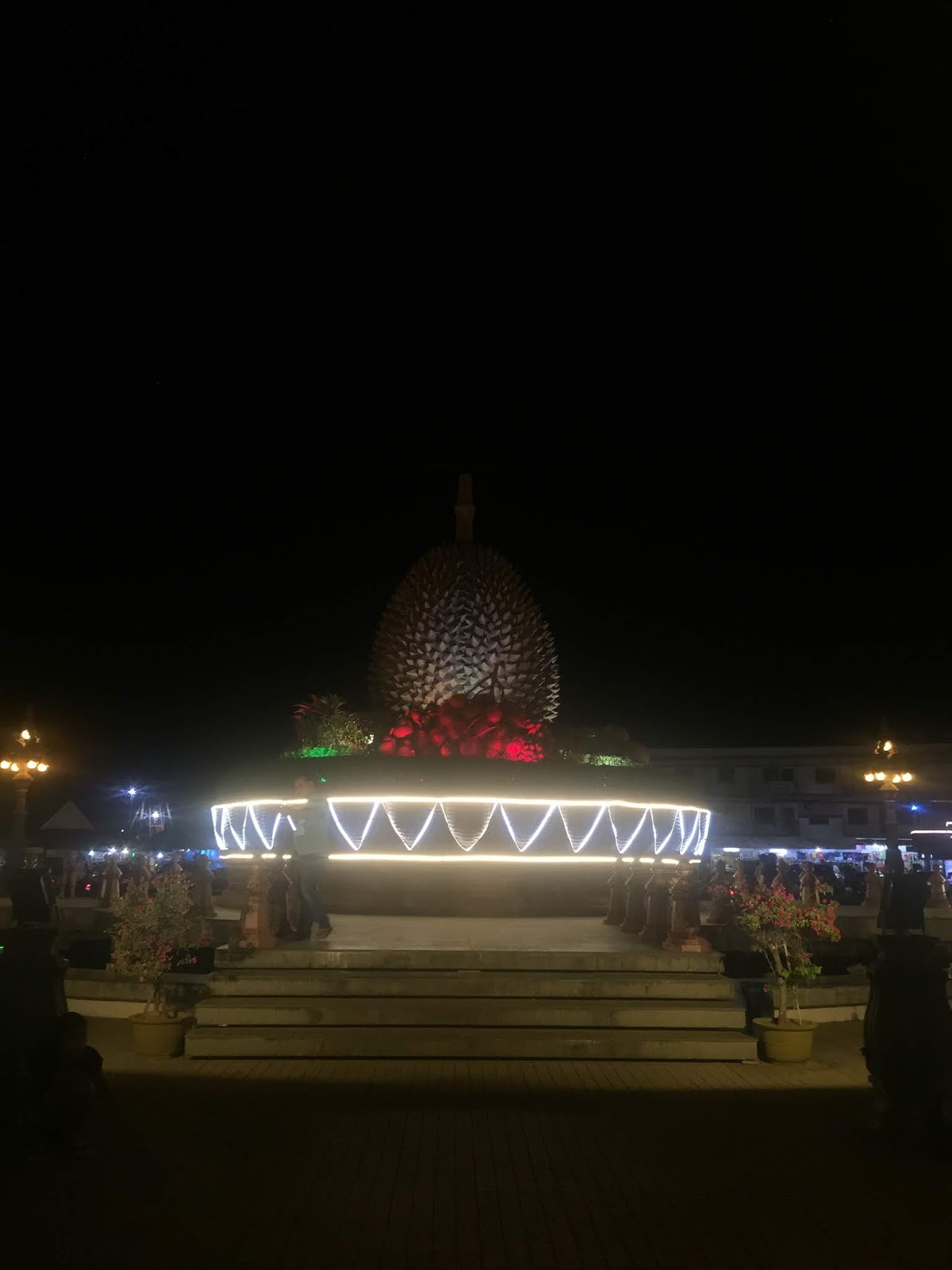
Duran roundabout at night.

A street in Kampot.
Famous bridge in Kampot from the old city to the new one.

My final moments were spent strolling alongside the Mekong River. The vibe here is really nice because there is a lot going on. There’s cafes, restaurants, bars, as well as people exercising with music in a public space. I just sat in one of the benches by the river as I read a bit and people watched. It was a nice way to end my last day in the capital.

My last stop in Cambodia was Kampot. This is a very charming and quaint town with a touch of French colonial influence. It is very easy to walk around and the sunset by the river is so amazing. Its claim to fame is a high quality pepper and fish sauce which they export.

On my first day in Kampot, I arrived in the afternoon and checked into my hostel and proceeded with what I like to do most, walk around. There is a street food place which is very cheap. I had a quick lunch and then went on to sightsee. One side of the river has a great deal of colonial architecture surrounded by a number of delightful cafes and shops. After looking around I went by the river to chill and enjoy the sunset. Night time was for checking out the night market. Nearby was a big durian shaped round about which looks nice at night with light. I ate some food at the market and then walked around but most of the clothes sold here were more modern than the usual markets I was used to. Before I went to bed, I booked a day tour at the Bokor Mountain National Park for the following day.

Outside one of the coffee shops.
Coffee shop.

Sunset in Kampot upon Mekong River
We had a lot to see in just one day! It was very foggy in the morning, even when we soared above the clouds. The view of Kampot from the top was like a painting. Then we proceeded to discover Bokor Hill Station, a luxurious mountain top resort constructed in the early 1900’s which now serves as ghostly remnants of the past. There were a number of abandoned French colonial ruins as well as a big welcoming Buddha and a church which belonged to the King. During the rainy season a waterfall is located nearby with a towering pagoda that provides an extensive view of Mother Nature’s beauty.


Sitting in one of the former french colonial buildings.

Former french  ruins.

The abandoned former French Bokor hotel and Casino.

Above the clouds from the Pagoda.
The view of Vietnam over the lake.

We wrapped up the day looking for fireflies on the river but I think my expectations were too high. Only saw a small number of them but it was still special. Don’t forget the mosquito repellent for the boat ride. That was a wrap up for me in this town but there is more to see like majestic caves, a day tour to Kep, beautiful beaches, salt fields and bike rides if you fancy a leisurely stroll on two wheels.